DavidLiu
Last edit December 21, 2011Note
On January 16th 2006, as the result of a steward decision regarding his continuing misbehavior following a six week SoftBan, DavidLiu was banned from WikiWikiWeb.
Such decisions are undemocratic, erratic, irrational and inexplicable. They don't benefit Wiki.
If you are new to this site, please do take a detour to NewUserPages first. Thanks. For people interested in Why am I here, or "Still here", the answer lies in an older version of WhyAreWeAllHere. HigherPrinciples in need of attention for the moment. CommunityBuilding does not quite make the HigherPrinciples, but it is very much related to ChangeManagement. I am not using TheAdjunct much at the moment due to time and resource limitations, but I support others to visit the site as it has better WikiTechnology and more use of RealNames. Therefore, will work on CriticalThinking if there is insufficient community participation later on. Also, AlternativeJobsForProgrammers being considered. People who want to reach me probably know how to do so via email, or know someone who knows my email. I will be here but focus on different things. -- dl Discussion in progress will be moved to OnDavidLiuDiscussion within a few days, and if no other remarks, then quickDiff (or NewRecentChanges) will show information to whoever interested. Response to DaveVoorhis will be moved there as well. Different things? All your recent activity has related to various management-related pages, but I wondered where you're going with them - you've written a lot, yet seem never to express your own views.
Pages to read later
Good stuff outside
WikiMail David, I didn't attend Jimbo's talk so am not qualified to provide any info about his views on "Social Mechanisms" for wiki. While I'm also interested in "Social Mechanisms" for wiki, I can't afford the time right now to discuss it. Hopefully soon :) -- BrandonCsSanders Hi David, I thought it appropriate to move this here, since it is really a meta-discussion about the creation of WhatIsSoa rather than discussion about SOA itself: Fine. You may have some implementations that claim to be "Service oriented" without use of Xml WebServices. However are you also claiming that it is not worth mentioning XML within your 30,000 ft high-level technical description of SOA? If so, I would like you to invite CostinCozianu (stated profession of SoftwareArchitect) to concur with you on this. -- DavidLiu, after many days of inactivity following response to GH observations XML is appropriately mentioned on WhatIsSoa, albeit in a humorous fashion, and further addressed in more detail under WebServices where it belongs. I see no reason to otherwise sully an accurate, broad, long-term, universal definition with technology de jour, especially as it is not a required component of an SOA. That said, I would certainly not object if someone wished to add content regarding XML or anything else, as long as it is accurate and fits within the context of the page. As this is a Wiki, and as I rightfully claim no editorial control over WhatIsSoa or any other except my HomePage, CostinCozianu is free to alter it as he sees fit. As are you. As is the entire population of the Internet. However, it seems awfully presumptuous of me to explicitly "invite" someone to contribute. That's tantamount to requesting that he or she contribute, and as I am not the boss of anyone here, it is not my place to do so. Indeed, it even seems slightly rude to do so. -- DaveVoorhis <-- for later attention by dl. If DV is reading and cannot wait, pls let me know Hi David. I am reading, but will happily await a response at your convenience. No rush. -- DaveVoorhis <- Hi Dave, I can give you a "quick incomplete feedback for you to consider". Besides XML (which GH mentioned) I "think" something similar to [loosely coupled systems] "maybe" worth inclusion. I have done lots of readings (and yes lots of MS / others market techure) and that aspect seem to stand out. There could be others. In business terms (easier understood by me) it gets back to "on demand". But I am busy in other "learning and doing" things now and so cannot interact with you in a "considered" fashion. -- dl Well! As I've mentioned before, I think XML is dealt with in an entirely appropriate and adequate fashion. As for "on demand," I've spent the last twenty-five or so years hearing variations of the underlying sentiment ascribed to everything from COBOL to APL to "PC technology" to Java, so I don't think SOA deserves to be considered "on demand" any more than everything else that's (effectively) been called "on demand." That said, please feel free to include something similar to [loosely coupled systems] on WhatIsSoa as you see fit. I'll edit it if, and as, I see fit. That's how this here "Wiki" thing works. -- DaveVoorhis <- Dave I have added an external reference that talked about loose coupling, in the ServiceOrientedArchitecture page that I hope is worth your time to wander by. I do not have original information in any technical topics, although I do form views once I have read a few that are not EchoChambers of each other. -- dl for DV Hi David. Thanks for the hello. I'll definitely be singing RubyLanguages praises whenever I see the chance. It seems to already have reasonable support in these parts. -- RobbieCarlton DeleteWhenRead
Ian since you are interested in LargeScaleCppSoftwareDesign, do you have thoughts to share on SoaAndLooseCoupling? -- dl Nov 05 I would respond the same as Gandhi when asked what he thought of WesternCivilization. I think it would be a good idea. -- IanOsgood
See http://en.wikipedia.org/wiki/Paul_Allen
From DealingWithFlames (applying the very principle:) UnintendedConsequence of ArgumentByFlame I have seen this page started off as a FlameBait, with something in the line of "XYZ...([you should know better]<- something close to that kind of tone).... signed by ABC". In its current form (mid Nov05) the first part has been "refactored". And a miracle appeared. It appear as though ABC started off in making a "considered contribution" and signed it that way. However it appear to people who know its history as highly hypocritical and therefore I would stick by the much older page of HowToReactToaFlame. And suggest other WikiReaders to merge useful discussions to that page. -- DavidLiu Hi David, if this weren't a homepage, I would put an ImplicitTopics tag on it :-) -- .gz
Hi David, This originally appeared on DotNetDevelopmentMethods and has been (quite rightfully, IMHO) removed, but I still think the question is interesting...
Mr. David Liu, You are such a busy BossyBoots about anything you can think of, almost like one of those clever little <meta> thingies that are so cute and like to be everywhere. Are you finding this to be an effective tool for your self? I would almost hope so, even though I find it to be an observable waste of effort in some cases. I hope you either make a lot of money for your employers or will do so in the future, for your self. You certainly have a lot of energy and bounciness if nothing else.
BTW I am puzzled by a lot of gnoming activities originating from cable.ubr04.croy.blueyonder.co.uk. A recent example being ContextObjectsAreEvil. The "activities" were mainly corrections of spelling and punctuation.
A lot of people have been telling you that they strongly dislike your idiosyncratic approach to (what you think is) WikiGnomeing. And now, here you yet again impose your odd thoughts on the subject onto the home page of someone who just passed away, which basically is directly disrespectful and in extremely poor taste, and also is interfering with the steady stream of his friends who have been dropping by to pay their respects and share their memories. This would be like barging into the funeral of someone you never met, and insisting on moving the coffin around, propping it up (with loose bricks) at a 30 degree angle, throwing the flowers you don't like into the trash, clearing away all of the plates at the wake while people were just beginning to eat, vacuuming and using a powered floor polisher while the priest is conducting the funeral ceremony, forcing mourners to get up and move over to the other side of the church... Just who do you think you are??? At this point, I really wish you would just stop. Stop. Stop. Stop. -- DougMerritt I had exactly the same reaction. Some of these visitors are probably barely familiar with C2, and putting obstacles in the way of this outpouring of emotional eulogies just seems *outrageously* insensitive. Liu, get it together. -- DanMuller David, please reconsider your entire approach to editing here. -- EarleMartin If anyone felt there need to be further discussion on the above, let's do it at TheAdjunct. Please note I have written a note regarding DougMerritt, and any discussion of that would only be responded at TheAdjunct, when I have time. Having said that, my attempt at creating the JohnVlissidesRemembered page was not the best action at the time as well. -- DavidLiu
Concur. Was there anything significantly different in version 71, compared with the later versions (minus recollections/tributes, of course)? On a separate matter, I think the "Hdot" person will become a flying visitor.
David, In regard to the above comments, since I was the original person to criticize you immediately above, I have been asked to inform you that WardCunningham's officially designated wiki stewards have now put you under a "SoftBan", which basically means that you are officially (via the authority Ward delegated to the stewards) required to stop posting altogether to c2 wiki for a period of not less than 6 weeks (in round numbers, that would be no sooner than January 15, 2006). The point of this is not so much to punish you, as it is to try to find a way to force you to think about your attitudes and actions. During the period of the SoftBan, the idea is that you could use that time to reflect on ways in which you have acted and spoken inappropriately from the point of view of the community. It is a "time out". Stop and think, deeply; use this period of time to reflect and grow. If you choose to ignore this requested, and un-enforced SoftBan ("unenforced" is why it's called "soft"), then you may become subject to a "HardBan", where stewards may cut off access to c2 wiki from any and all IP addresses that you appear to use. You may be subject to a HardBan even after 2006-Jan-15 if you continue to exercise any poor judgement which wiki Stewards view as antisocial. None of this is currently intended to say that you are permanently persona non grata; the intention is to tell you that you have been ignoring feedback that is essential for you to react to rather than ignore, and that you are now officially on notice that you may not continue to ignore such feedback, while continuing to participate. You may accept feedback, and change your ways, and continue to be a participant here, or you may ignore feedback, not change your ways, and then be excluded from participation here, first by soft measures, and eventually by increasingly hard measures, if necessary - it's up to you. On a personal note, as I said recently on TheAdjunct, I would like to like you, but you have made that increasingly difficult recently, and it's up to you from here on out. You are not currently banned in any sense from TheAdjunct, as far as I know, so that is, at least for now, an outlet for your voice. You have already received feedback there, as well, that appropriate behavior is demanded. -- DougMerritt I do not think DougMerritt has the authority ever had the authority to suggest any type of ban on anybody. However I did not (and do not) want to start an argument and I was busy (and still busy), so I left things as they were. Doug if you are ever a steward here, I will consider requesting Ward to remove you from that list, subjected to your future behavior at this site. Notice served 16Jan 2006 -- DavidLiu
New Year resolution for IT relevance end 2004 version MicrosoftServicesForUnix and PythonLanguage appears to be most sensible for me. And PythonLanguage because it is a good "glue" language, and close to CeeLanguage.
Rescued from a MindWipe, name changed Nice post XXX. For many years, I have wrestled with what I call this imbalance between my spiritual/nature side and my computer side. I have spent years out in nature with my Native American Medicine Men teachers and then I return to work and I wonder what the hell I am doing here. I tend to go in cycles. I will spend months obsessed with the spiritual side and do no computer activites after work and then swing the other way and obsessively devour books and play with Linux until 6 in the morning. I have been unable to find a balance between the two. But also, I find, as you did, in the scheme of things, this computer stuff is relatively unimportant. There is so much out there and so much to do. Looking at this, I need GettingOut to GetaLife too :(
With Luck, I will refactor YagniPrinciple to YagPi. P as in Program. If I succeed, I will tell people ArchitectsDontCode, and it is not one of my ManagementRoles.
You can blame me for the following... at least
This is being overused as a DramaticIdentity and the edits being made don't usually even reflect why it's being used. It is not overused because I am the only one using it, it is better than an IP number (mine changes and also shared with another person), it shows my affiliation (bondage) with a software platform. My previous experience of using real name all the time has not always been memorable, to put it mildly Hmm. RealNamesPlease. How can anybody be sure that only one person is using this DramaticIdentity? For me, it's obvious if somebody else claims to be MartySchrader and makes a change in my name. Of course, I would have to then hunt them down, kill them, and eat them. Well, maybe not eat them; my diet contains enough red meat already. [I thought long pig was the other white meat?] I am trying to contact 24.238.146.101 (see IpUsername) but cannot because there is not even a DramaticIdentity used. -- MicrosoftSlave People are missing the point: "MicrosoftSlave" is being used as a pseudonym, not a DramaticIdentity. [For the record, this wiki prefers that people use RealNamesOnlyOrAnonymous, please.] -- AnonymousDonor
MicrosoftSlave in the News Made it to the WikiVandals page (on and off due to EditWar) during week of 2Aug04. I believe it was put there by lpib.gva.es and I would like some more evidence to support my claim to vandal fame
Discussion re: Use of VIP signatures Doug, I got confused by a new page BrufPredictsFailure. The page is one strand of a thread on the XpMailingList, like the page says at the top. Click here to experience the real thing: news://news.gmane.org/gmane.comp.programming.extreme-programming I got caught by the signature KentBeck in the new BrufPredictsFailure as I am collecting VIP visit information for WikiVipvisits With due respect to PhlIp, I think it is misleading to write as though KentBeck has joined in on a discussion on this wiki. The act diminishes credibility of this wiki. I like to hear PhlIp and MarkIrons have to say on this. Please BearWithMe for using your "home" to invite other guests over for a while -- dl I, the evil [and famous] PhlIp, have posted many meritorious threads on this Wiki. WikiIsNotaReligion, guys...
Finding edits in RecentChanges done as MicrosoftSlave indicate to me that someone does not get the idea of this wiki, and I am more easily tempted to undo these changes.
See MicrosoftIsaNiceMonopoly. [If you can see like MicrosoftSlave, who is a nonCategoryMicrosoft :)]
NewCommunityMembers don't use RecentChanges I do not agree that most newcomers use RecentChanges. I think most are like me, jump from the entry point page (from another website/newsgroup, etc) and jump to C2 links within a page. And like me, most new comers probably wanted to use FindPage or GoogleSearch to see whether other material of interest to them exists at C2 in sufficient quantity. I would like to discuss with JonathanTang who has a different view, but he is busy and has been affected by "edit code word". OneMansMeatIsAnotherMansPoison If I go to a new wiki site now, I use RecentChanges first, not for finding out what pages I should read, but to get an estimate whether there is a site with lots of ACTIVE participants.
<<< I am on site but not responding to query / questions for a few days. LetHotPagesCool >>>
Dialog with DaveVoorhis David, I'm curious as to why you cut out Costin's comments. His comments were apt, appropriate, and probably reflective of the thinking of a number of us who have been reading WebServicesSecurity, SoaIsNightSky, BoilTheOcean, and similar pages. Therefore, I shall weigh in with a similar comment: What is it that you are trying to convey? What are you trying to accomplish? As someone who is going to start teaching an undergrad course on DistributedComputing and WebServices early next year, I've been boning up on the subject area. What I've read both on-line and in various books on the subject is generally very clear and understandable. WebServices and ServiceOrientedArchitecture essentially involve straightforward architectural designs and technological approaches, without any need to overcome conceptual, mathematical, or theoretical hurdles. Descriptions of these should be straightforward; indeed, I would hope that pages here would further clarify these already readily-understandable subjects. Unfortunately, though I don't wish to be unkind, and even though your pages have been improving, they are still strangely - for lack of a better word - surreal. Your lack of clarity does a certain disservice to these topic areas, as they should be easier to understand, even for non-programmers, than more difficult topics such as, for example, TailCallOptimization, which I picked at random. As it turns out, TailCallOptimization is much easier to understand than ServiceOrientedArchitecture, and that just shouldn't be the case. -- DaveVoorhis I do not understand. What is so complicated with TailCallOptimization, compared to ServiceOrientedArchitecture? Would you like to start WhatIsSoa page, since you say you are an academic, know ServiceOrientedArchitecture and interested in FixYourWiki? And where were you when the SOA page was smaller, see InternetArchive Apr04 version? -- dl I have provided some response but be forewarned I get TiredOfDebating quickly. That does not mean I do not think discussions are not needed. There needs to be a time, a place and a pace. No public brawls -- dl added after CC and DV added information. Everyone who is interested in this "dialogue" see visit http:quickDiff?GeoffBrownWikiExperiences
To Costin
On MessageLevelSecurity, a SOA page With due respect I do not think any one person here can do SOA type pages justice, not even DonBox of SoapProtocol fame. This is because SOA has taken on a life of its own, and there are multiple viewpoints that have different degree of validity.
Material parked here for now. For MessageLevelSecurity
A passing note: And some have the gall to wonder why participation rates are way down on this wiki lately? Leave the Slaving Micro dude alone and do something constructive for a change, for heaven's sake! That's one very smart idea, right there. The analogy in real life would be that if you see somebody throwin garabage in the park or writing his name on the benches, you leave him alone and do something "constructive". What the heck, even if RA would come back we should leave him alone and do something constructive for a change. What did you change lately, by the way?
I do not have a TopMind, but I find necessary to use this pseudonym often, due to WikiTrolling. It is better than using an IpUsername. You can refer to me as David should we engage in sharing of opinions. And maybe I'll use "mS" as initials since MS is the shortform for a more famous person here.
2006 concerns RegularExpression software for DotNet at http://www.ultrapico.com/Download.htm
DavidLiu's personal school notes moved here from CapabilitiesManagement: CapabilitiesManagement is a StrategicManagement issue, dealing with an aspect of OrganizationalDevelopment that aim at managing the overall capabilities of the workforce. There should not be a term called Process Capability, but.. I have been searching for a proper WikiName for a topic on PeopleManagement for quite a while now, this one I am using at the moment seem to be the best I can find. Still I am appalled that when I search for "process capability" on Google a large number of returns came back. When you have highly motivated teams and people skills are aligned to their roles, then great results are achieved even with poor processes. Capabilities lie within the people and the teams, otherwise all companies who pay for an expensive EnterpriseResourcePlanning package will get instant boost in their capabilities.
BusinessProcessManagement (BPM) and CapabilitiesManagement In BPM, the project sponsors, managers and analysts are not focussed on HumanResources, and therefore large BusinessProcessReengineering projects fail. the processes are provably correct / optimal, but the people being asked to man the processes come short of expectations.
CultureDifferences and CapabilitiesManagement In reading TheToyotaWay, I have noted a few places where the methods of the ToyotaProductionSystem can be construed as MicroManagement, and there were notes about huge ChangeResistance in western cultures.
PeopleAreTheProblem If a key champion decides to execute the ChangeYourOrganization strategy in mid program, then the size of the project failure is linked to the size of the project.
Topics of concern to CapabilitiesManagement At an individual level, it is HumanPerformanceImprovement (HPI) At a team level, it is LeadingChange, SuccessionPlanning and managing SocialDynamics At an organization level, it is KnowledgeManagement, HumanCapital WorkforcePlanning
TheFifthDiscipline The author, PeterSenge has taken a SystemsThinking approach to describing the capabilities of a LearningOrganization. The disciplines are Personal Mastery, Mental Models, Shared Vision, Team learning, SystemsThinking. Representation of PeterSenge views on learning and capabilities is located at Alleged ComplexityManagement failures From 1997 Strategy and Complexity seminar at London School of Economics, ( http://www.psych.lse.ac.uk/complexity/Seminars/1997/report97nov.htm )
ProjectManagement aspects
LessonsFromFailure People CMM article at http://www.sei.cmu.edu/cmm-p/
Resources circa 2000 Nature and Dynamics of Organizational Capabilities (ISBN 0198296800) OrganizationalChange overview http://managementhelp.org/org_chng/org_chng.htm OrganizationalDevelopment game http://web.nmsu.edu/~dboje/TDgameboard.html Sample survey (attraction/retention/value) using AppreciativeInquiry technique http://appreciativeinquiry.case.edu/practice/organizationDetail.cfm?coid=1220§or=20 There exist a huge PeopleCapabilityMaturityModel, or PeopleCMM, developed in 2001 and can be downloaded at http://www.sei.cmu.edu/pub/documents/01.reports/pdf/01mm001.pdf Strategic Capabilities at http://www.providersedge.com/docs/km_articles/Shaping_HR_Mgmt_Within_KDriven_Enterprise.pdf Exploit intangible assets to create value http://www.juergendaum.com/news/07_06_2001.htm LeaderShip ChangeManagement attitude - Empathize and not Sympathize http://blogs.cio.com/the-primordial-factors-in-change-management#comment-1435
CategoryManagement
Moved from ComplexEventProcessing: ComplexEventProcessing involves obtaining a human understanding of the multitude of low-level events produced by computers and information systems From a product perspective, ComplexEventProcessing (CEP) is a category of infrastructure software complementary to financial trading systems, market data systems, and BusinessProcessManagement (BPM). The term "CEP", in its usage suggested here, was arguably coined in 2002 by StanfordUniversity professor DavidLuckham in combination with mainstream industry analysts (Gartner, Forrester), and has been also used by several vendors in the space (APTSoft, NEON Systems, TIBCO, etc.). As of 2005, it has become a more mainstream term and is considered to be an important component of any advanced BusinessActivityMonitoring (BAM) solution. Some (see BigBlue link in EnterpriseServiceBus) view EventDrivenArchitecture is aworking implementation of the ComplexEventProcessing nirvana.
CEP - an IT response to ComplexityManagement requirements ViableSystemsModeling can be seen as a BusinessModel to articulate the forces that shape an organization, see for example, a paper at http://www.syncho.com/pages/pdf/Introduction%20to%20Viable%20System%20Model%20RETG.pdf IT has a solution to every problem. One view is that ComplexEventProcessing is responding to the need to handle issues in the ComplexityManagement domain, e.g. getting information to manage a crisis, there is no time to build an application to provide relevant information. There is a fair number of links relating CEP and VSM, an example being the CEP blog which tracks sources related to ComplexEventProcessing, at http://cep.weblogger.com/
References 2004 Why Our Computers Act Irrationally at http://www.ftponline.com/javapro/2004_06/magazine/columns/objectenterprise/ Old discussions - to be removed
Moved from PortalSoftware: 2006 Update BEA has renamed Plumtree as AquaLogic, maybe it is included in the AquaLogicServiceBus suite of products. PortalSoftware classification and characterization Following taxonomy taken from a 2002 paper done by Giga and available at Microsoft at http://download.microsoft.com/download/4/7/3/473B072C-5D69-4B7C-B0FD-2607813413C3/Evaluation_Criteria_for_Enterprise_Portals.pdf
LessonsFromFailure (Becoming) The most expensive newsletter In a 2004 article at http://www.computerworld.com.au/pp.php?id=1791697278&eid=-180, a Meta Group commentator said many PortalSoftware implementations have become glorified intranets, due to various reasons including :
Search and Adopt Some people are saying the ability (or lack of) to do search well will make or break PortalSoftware. To that extent, at http://www.itwire.com.au/content/view/4980/107/ a headline grabbing article talk about the battle between Microsoft and Google. Afterall, the desktop is the ultimate PortalSoftware.
Emergent risks Tower of Babel Earlier this year I read there is renewed interest in organizations to using PortalSoftware to deliver information. However the big players like SapCorporation, MicrosoftCorporation etc are also viewing these products as gateways to increase use of their IT products. It will be confusing. See "Portal Proliferation " at http://www.cio.com.au/index.php/id;1003039612;fp;4;fpid;4 , titled "Portals At the Crossroads".
Reference material Taking a business-centric approach to portals at http://www.steptwo.com.au/papers/kmc_businessportals/index.html examine the pros and cons with a 2006 perspective Pros:
see also WikiPortal EnterpriseInformationPortal
Moved from ComplexityManagement: See ComplexEventProcessing, BusinessActivityMonitoring, ManagingProjectComplexity
BusinessProcessManagement (BPM) dimension There can be AccidentalComplexity that are process oriented. An example can be the need to integrate processes of two firms that have recently merged. Integration can involve re-negotiation with staff, unions and even suppliers and customers. The objective of BPM is to reduce complexity, without shifting costs and concerns (e.g. risk) to other parts of the organization unnecessarily.
SystemsThinking, GeneralSystemsTheory and ComplexityManagement An analyst with SystemsThinking capabilities can note the interactions between related components in a system, and see these as either the source of a problem, or an opportunity to help solving problems. ViableSystemsModeling (VSM) techniques pioneered by Stafford Beer, seen used at cooperatives (see e.g. http://open.coop/tiki-print.php?page=Viable%20Systems%20Model), is an example of the application of SystemThinking to ComplexityManagement VSM is actually classified within the genre of GeneralSystemsTheory (GST), a paper on the exploration of this loosely connected set of concepts can be seen at http://journals.isss.org/index.php/proceedings50th/article/view/377/144 A wiki dedicated to Cybernetics is at http://cybernetics.wikispaces.com/, and they have a description of GST at http://cybernetics.wikispaces.com/General+Systems+Theory Applications of GST research in real life include but not limited to Public Policy making.
Moved from StuCharlton: More Mail I have added a section linking CEP and ComplexityManagement, a new page I started. When you have time, kindly take a quick look and see anything contrary to your perspectives.
Moved from RaceToTheBottom: RaceToTheBottom page was a victim of a RaceToTheBottom exercise earlier, if my recollections are accurate. Lets see a nonwiki description of this phenomena, at http://www.wisegeek.com/what-is-a-race-to-the-bottom.htm
BTW, one way to avoid wiki RaceToTheBottom behavior was stated in ExponentialBackoffEditing
Moved from CompetitiveStrategy: ISBN 0-684-84148-7 Originally written in 1979, Michael Porters book helped companies to use BusinessModeling to develop business strategies, through the use of the "Five Forces" competitive framework laid out within. See WikiPedia entry at http://en.wikipedia.org/wiki/Porter_5_forces_analysis for an introductory guide on the subject. In a new introduction written in 1998, the author suggested his book "provided tools for capturing the richness and heterogeneity of industries and companies while providing a disciplined structure for examining them." Although new technologies, e.g. arrival of internet age, came and environments change (e.g. increased globalization), the author maintained his viewspoints remain relevant. Strategy is about making tough choices A strategic position is a path, not a fixed location The author also suggested that his framework is "dynamic", by disclosing most significant "dimensions of change". Staying flexible destroys competitive advantage He suggests jumping from strategy to strategy makes it impossible for companies to be good at implementing any strategy. He does recognize the need to continually incorporate new ideas to maintain operational effectiveness.
Operational Effectiveness is not strategy sourced from 1996 HBR "What is a Strategy" The various management tools dramatically improve effectivenss but are not strategy because these cannot be sustained. What is a strategy summary is available at http://www.maaw.info/ArticleSummaries/ArtSumPorter96.htm
StrategyExecution concerns Strategy hasn't changed, but change has SouthWest airlines said to be continuous in its strategy of 30 years ago, serving price-minded travellers, but do so in a different way. There is a "need to balance the internal juxtaposition of change and continuity."
On Japan but not specifically TheToyotaWay M Porter has a 2001 book called "Can Japan Compete?" (ISBN : 0465059899) where he said the Japanese companies were engaged in a "competitieve convergence" through imitation of each other. A two part interview regarding this book can be seen at http://hbswk.hbs.edu/item/1894.html
CategoryBook
Moved from StrategyExecution: This page is reserved for material related to BusinessModel to BusinessProcessManagement to EnterpriseApplicationIntegration ValueStreamMapping exercise. StrategyExecution need to have sufficient attention to RiskManagement. However the determination of StrategicRisk is an exercise that belongs within StrategicPlanning.
A DecentralizedOrganization UserStory From a 1997 description from the successful Southwestern Airlines CEO, at http://pfdf.org/leaderbooks/L2L/spring97/kelleher.html "(Corporate) Culture Defines Personality" and "Personality Is Strategy"
Avoiding BusinessImpedanceMismatch no good material yet
To MichaelSparks who dismissed this page four weeks ago I have not seen people seconded your delete, I have restored it because
Moved from CulturalChange: The Key to Cultural Transformation at http://pfdf.org/leaderbooks/L2L/spring99/fh.html talked about EmPowerment, has some similarities to the SouthWestAirlines CEO articulation of successful StrategyExecution
Moved from BusinessImpedanceMismatch: BusinessImpedanceMismatch happened here, and will recur at my next workplace. BusinessImpedanceMismatch starts with the mismatch between StrategicManagement initiatives and BusinessProcessManagement projects. The gulf between expectations and realities grew bigger when BusinessProcessManagement projects get implemented via SystemIntegration tasks.
References Aligning actions and values by Jim Collins at http://pfdf.org/leaderbooks/L2L/summer96/collins.html
CategoryManagement
Moved from LeaderShip: Drucker foundation Leader to Leader guide at http://pfdf.org/leaderbooks/foundation/L2L-guide.html
Moved from ProcessFocusedOrganization: ISBN 0-87389-627-0 A book on realizing BusinessProcessManagement published in 2004. Sample chapter on CorporatePerformanceManagement can be downloaded at http://qualitypress.asq.org/chapters/H1207.pdf#search=%22%22process%20focused%20organization%22%20gardner%22 Appear to have attempts to address the psychology of ChangeManagement, by saying TurnAroundManagement fails due to excessive pressure to find and pick LowHangingFruit
CategoryBook
Moved from ChangeYourOrganizationTactics: "Do your work" establishes reputation and credibility, its AmatterOfTrust. Not easy due to CognitiveDissonance ShieldsUp, says the ParanoidsAnonymous
Moved from InspiringLeadership: Originally created for the FormulaForSuccess page, this has a wider scope then originally intended.
Borrowed words from others "Be the Change You want to See in Your World"
Examples and how so Famous people
Books on InspiringLeadership ISBN 0071464875 ISBN 0972732322 ISBN 0071464875 ISBN 1591840449 ISBN 1861529821
Warning: The page is getting worse at this moment, hopefully it will get better What I want out of this A page to come to revisit from time to time A page to rediscover that leadership aspirations, and possibilities, exist within most of us So while I am interested in leadership that is universally acclaimed, I get more thrilled by examples shown by the unknown individuals whose names will be forgotten but actions linger in a positive way. Hopefully the leadership examples can be followed by others.
CategorySuccess
Moved from ChangeManagement: Large group Change Management case http://www.new-paradigm.co.uk/Large-groups.htm
Moved from BusinessProcessManagement: BusinessProcessManagement, BPM for short, is concerned with the integration of work processes that have evolved separately to serve functional needs in the enterprise. At times the lesser used term BusinessProcessIntegration (BPI) is employed to stress the importance of "integration". This approach focus on needs of the company to constantly evolve its processes to respond to changes in the business environment (regulatory and legislative requirements, competitive forces, partnering opportunities, etc). See http://www.bcs.org/BCS/Products/Publications/Books/BySeries/Other/BusinessProcessManagement/ for a new book from British Computing Society. Another related term is BusinessProcessImprovement. A classic (1991) book on this is ISBN 0070267685. See also TheBusinessOfBpm and TheTechnologyOfBpm BusinessProcessManagement is not really new, according to http://bpm-today.newsfactor.com/story.xhtml?story_id=24304. It cited EnterpriseResourcePlanning as an example of software that already incorporated process management, before the term has been adopted widely. And in business the concept of SupplyChainManagement has been around for a while. BusinessProcessReengineering can be one approach used to addressing the needs of BusinessProcessManagement. In these instances, the project scope will invariably be crossing existing organization boundaries. OTOH, some felt BusinessProcessReengineering is not BusinessProcessManagement, see http://www.darwinmag.com/read/030103/wavehistory.html. The authors of ComponentBasedBusiness provide a conceptual framework to building an organization that is inherently agile. Standards organizations have already made progress in defining building blocks for IT solutions. An example of this being the ExtensibleMarkupLanguage based BPEL (BusinessProcessExecutionLanguage). One vendor consortium is BPMI, which has produced several specifications. See http://www.bpmi.org/specifications.esp
The Strategy dimension Need to link to StrategicPlanning for larger projects Nick Carr, author of DoesItMatter, said in his May03 article at http://www.dataframeworks.com/pdfs/R0305B.pdf titled "IT Doesn't Matter", that former Strategic investments could and would turn to becoming a strategic liability. He suggested American Hospital Supply innovative use of IT in the 70's locked out competitors, but that system was viewed as a "millstone around their necks" by senior management in the 90's. It is therefore within the mandate of BusinessProcessManagement to examine whether process improvement efforts will create a longterm liability that may exceed the benefits that can be realized within the planning horizon.
SystemsThinking - a "core" competency Peter Fingar said "General System Thinking" is a required DomainKnowledge for BPM practioners, because BPM is about the business of managing complexity. See Sep05 article in BPTrends He said this as a description of SystemsThinking
BPM related programs and initiatives SixSigma - not business focussed A few years ago, SixSigma was leading the ChangeManagement drives in many organizations. People were getting certified by consulting firms, statistics were collected and interpreted, and a few good things emerged. An article called BPM 101, at http://www.buzzle.com/editorials/3-24-2006-91846.asp , written by the president of SixSigma in 2006, have all these engineering based terms like "benchmarking", "diagnosing", "base-lining", "measure", "data-driven" etc embedded throughout his thesis.
Resources Lombardisoftware has a survival guide at http://www.lombardisoftware.com/library/BPM_SurvivalGuide.pdf. Tibco sponsored paper on BPM user guide at http://www.tibco.com/resources/mk/tibco_white_paper-bpm.pdf A 2003 book called "The Third Wave", co-authored by the BPMI co-chair Howard Smith, can be viewed at http://www.fairdene.com/. The viewpoints expressed elicited a large body of comments on the subject, implementation and impact of BusinessProcessManagement. For people interested in the history of BusinessProcessManagement, see a multipart blog in 2006 at http://www.ebizq.net/blogs/column2/archives/2006/06/a_short_history_7.php. A widely read blog on the technical dimension of BusinessProcessManagement is available at http://itredux.com/blog/ BusinessProcessReengineering resource site http://www.prosci.com/reengineering.htm Two of the larger websites dedicated to BusinessProcessManagement concerns are:
CategoryManagement CategoryEnterpriseComputingConcerns
Moved from DoesItMatter: The late PeterDrucker said in "The Next Information Revolution" article
Moved from TheFifthDiscipline: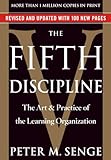 ISBN 0-385-51725-4 While Senge's book frames the issue and primes management for a pattern-based view of the world, it's my personal opinion that his approach to finding these patterns is a bit haphazard, and I certainly feel his diagraming style could use some help. I'd really like to see some convergence between the tech-centric and business-centric worlds (isn't this one of the things we are supposed to get from ObjectTechnology) and a well defined method of documenting patterns across the two might be a nice starting place.
Moved from GettingToYes: Later chapters talk about some additional techniques, most notably BestAlternativeToNegotiatedAgreement, or BATN. The Harvard Negotiation Project originated technique advocated in the book is also known as "Interest based negotiation".
Moved from WikiMindWipeRealityCheck: Chancing on this old page, I think SlowDownToSpeedUp is the only viable deterrent prevent arriving at the unwanted PissedOffAndExtremelyAngry MentalTotems. Time to reread GettingToYes.
Moved from PrisonersDilemma: There is a modified PrisonersDilemma game described in a 2005 paper at http://www.lse.ac.uk/collections/methodologyInstitute/pdf/SKanazawa/RS2005.pdf worth reading. Its title is "Separating Trust from Cooperation in a Dynamic Relationship".
Moved from CultureIsTheManifestationOfLeadership: PeterSenge, in a 1996 article titled "The Ecology of Leadership", observed:
DavidLiu page last change before this one, around Oct06, reverted this round DavidLiu is seeking new opportunities, after leaving his "secure job" of the past decade, and will be too busy to engage this community for now. If you want to contact me, please leave a message at my MeatBall home page and I will try to watch that from time to time -- dl 29Jun07 --SelimErol
CategoryHomePage
If you are new to this site, please do take a detour to NewUserPages first. Thanks. For people interested in Why am I here, or "Still here", the answer lies in an older version of WhyAreWeAllHere. HigherPrinciples in need of attention for the moment. CommunityBuilding does not quite make the HigherPrinciples, but it is very much related to ChangeManagement. I am not using TheAdjunct much at the moment due to time and resource limitations, but I support others to visit the site as it has better WikiTechnology and more use of RealNames. Therefore, will work on CriticalThinking if there is insufficient community participation later on. Also, AlternativeJobsForProgrammers being considered. People who want to reach me probably know how to do so via email, or know someone who knows my email. I will be here but focus on different things. -- dl Discussion in progress will be moved to OnDavidLiuDiscussion within a few days, and if no other remarks, then quickDiff (or NewRecentChanges) will show information to whoever interested. Response to DaveVoorhis will be moved there as well. Different things? All your recent activity has related to various management-related pages, but I wondered where you're going with them - you've written a lot, yet seem never to express your own views.
Pages to read later
- WhenTheFormulaChangesFromMakingMoneyToLosingMoney
- DynamicObjectModel and the more common name of AdaptiveObjectModel, and DotNet implementation example at http://polelo.cs.up.ac.za/papers/AdaptiveObjectModelling.pdf
- PositiveEngagement (Mine, not written yet)
- AgencyProblem (or AgencyCost where administrators not induced to acting in interests of owners) vs MoralHazard (where character / circumstances result in skewed behavior of one of the parties in a contract). WikiPedia has both described. related to Governance
Good stuff outside
- Carlos Perez on REST, loose coupling, reusability etc. One link at http://www.manageability.org/blog/archive/20030628%23principles_of_loosely_coupled_api#comments
WikiMail David, I didn't attend Jimbo's talk so am not qualified to provide any info about his views on "Social Mechanisms" for wiki. While I'm also interested in "Social Mechanisms" for wiki, I can't afford the time right now to discuss it. Hopefully soon :) -- BrandonCsSanders Hi David, I thought it appropriate to move this here, since it is really a meta-discussion about the creation of WhatIsSoa rather than discussion about SOA itself: Fine. You may have some implementations that claim to be "Service oriented" without use of Xml WebServices. However are you also claiming that it is not worth mentioning XML within your 30,000 ft high-level technical description of SOA? If so, I would like you to invite CostinCozianu (stated profession of SoftwareArchitect) to concur with you on this. -- DavidLiu, after many days of inactivity following response to GH observations XML is appropriately mentioned on WhatIsSoa, albeit in a humorous fashion, and further addressed in more detail under WebServices where it belongs. I see no reason to otherwise sully an accurate, broad, long-term, universal definition with technology de jour, especially as it is not a required component of an SOA. That said, I would certainly not object if someone wished to add content regarding XML or anything else, as long as it is accurate and fits within the context of the page. As this is a Wiki, and as I rightfully claim no editorial control over WhatIsSoa or any other except my HomePage, CostinCozianu is free to alter it as he sees fit. As are you. As is the entire population of the Internet. However, it seems awfully presumptuous of me to explicitly "invite" someone to contribute. That's tantamount to requesting that he or she contribute, and as I am not the boss of anyone here, it is not my place to do so. Indeed, it even seems slightly rude to do so. -- DaveVoorhis <-- for later attention by dl. If DV is reading and cannot wait, pls let me know Hi David. I am reading, but will happily await a response at your convenience. No rush. -- DaveVoorhis <- Hi Dave, I can give you a "quick incomplete feedback for you to consider". Besides XML (which GH mentioned) I "think" something similar to [loosely coupled systems] "maybe" worth inclusion. I have done lots of readings (and yes lots of MS / others market techure) and that aspect seem to stand out. There could be others. In business terms (easier understood by me) it gets back to "on demand". But I am busy in other "learning and doing" things now and so cannot interact with you in a "considered" fashion. -- dl Well! As I've mentioned before, I think XML is dealt with in an entirely appropriate and adequate fashion. As for "on demand," I've spent the last twenty-five or so years hearing variations of the underlying sentiment ascribed to everything from COBOL to APL to "PC technology" to Java, so I don't think SOA deserves to be considered "on demand" any more than everything else that's (effectively) been called "on demand." That said, please feel free to include something similar to [loosely coupled systems] on WhatIsSoa as you see fit. I'll edit it if, and as, I see fit. That's how this here "Wiki" thing works. -- DaveVoorhis <- Dave I have added an external reference that talked about loose coupling, in the ServiceOrientedArchitecture page that I hope is worth your time to wander by. I do not have original information in any technical topics, although I do form views once I have read a few that are not EchoChambers of each other. -- dl for DV Hi David. Thanks for the hello. I'll definitely be singing RubyLanguages praises whenever I see the chance. It seems to already have reasonable support in these parts. -- RobbieCarlton DeleteWhenRead
Ian since you are interested in LargeScaleCppSoftwareDesign, do you have thoughts to share on SoaAndLooseCoupling? -- dl Nov 05 I would respond the same as Gandhi when asked what he thought of WesternCivilization. I think it would be a good idea. -- IanOsgood
See http://en.wikipedia.org/wiki/Paul_Allen
  Is PaulAllen still involved with IT?

  I have seen an CutterConsortium intro of PaulAllen at http://www.cutter.com/consultants/allenp.html.
  Is he still active in IT development and application in 2005?
From DealingWithFlames (applying the very principle:) UnintendedConsequence of ArgumentByFlame I have seen this page started off as a FlameBait, with something in the line of "XYZ...([you should know better]<- something close to that kind of tone).... signed by ABC". In its current form (mid Nov05) the first part has been "refactored". And a miracle appeared. It appear as though ABC started off in making a "considered contribution" and signed it that way. However it appear to people who know its history as highly hypocritical and therefore I would stick by the much older page of HowToReactToaFlame. And suggest other WikiReaders to merge useful discussions to that page. -- DavidLiu Hi David, if this weren't a homepage, I would put an ImplicitTopics tag on it :-) -- .gz
Hi David, This originally appeared on DotNetDevelopmentMethods and has been (quite rightfully, IMHO) removed, but I still think the question is interesting...
- ... Nobody cares about developers. -- dl
- dl, you consistently paint a grim picture of a development environment in which developers are the lowest slime on the food chain -- seemingly less empowered than part-time janitorial staff -- who neither choose their own tools (the executives, of all people, choose these?) nor does anyone care about them. Please let us know where you work so we can avoid it! -- DV
- I am going away for a day or two. It is not appropriate for me to remark on my existing situation. However "Nobody cares" is a HaHaOnlySerious remark. My experiences are developers get treated best in large software producing firms or academic institutions, or real small shops where the developer makes or breaks the entire IT setup. Anywhere else IT is an expenditure, after DotComBust and YtwokExperiences. You can read similar experiences from "trade press", and even in recent posts by other technical people here at C2.
Mr. David Liu, You are such a busy BossyBoots about anything you can think of, almost like one of those clever little <meta> thingies that are so cute and like to be everywhere. Are you finding this to be an effective tool for your self? I would almost hope so, even though I find it to be an observable waste of effort in some cases. I hope you either make a lot of money for your employers or will do so in the future, for your self. You certainly have a lot of energy and bounciness if nothing else.
- Thanks for your unsigned contributions and yes lots of wasted efforts too. Now - any technical topics (e.g. practical stuff in InformationSecurity and/or InteractionDesign, query I had outstanding such as those in ProxyPattern) I can learn from you / your friends contributions here? CategoryPhysics cannot keep my stomach filled. As far as energy, I do not have much left for the next round of Spam infloods. Maybe you can pick up the slack. DeleteWhenRead
BTW I am puzzled by a lot of gnoming activities originating from cable.ubr04.croy.blueyonder.co.uk. A recent example being ContextObjectsAreEvil. The "activities" were mainly corrections of spelling and punctuation.
- I would have preferred if you have given me an opportunity to view the QuickDiff for the technical pages before you apply your changes. How about write in my homepage for a list of pages you intend to work on? Or create a section in my page on the new wordings of your changes so I can apply (or argue with you if I do not agree)? Reasons I may disagree could be
- technical contents that have not changed for a long time (e.g. over two years). If the "bad grammar" stayed on that long maybe the bigger problem is TemporalContext changes.
- And at least once in Nov, I chanced upon a discarded external site material. Found some material of interest to me, wrote about that here, and subsequently another frequent contributor found it worthwhile to add additional related remarks.
- [Later] found another reason in the beauty of unretouched posts. See http:quickDiff?OrdinaryPeople and see how long it can keep that old timestamp.
- I am all for cleaning up otherwise. Thanks for listening from DavidLiu
- I recently supplied the apostrophe in "that's", where it was missed... but not where doing so would break up a WikiName... several dozen of the initial 200 or so pages, most being discovered by editing each page in turn.
- Many of the pages carried other errors, such as "its" for "it's", and some of these were corrected not just where first found but also in all pages containing them. All changes were done "in place", without page rearrangement.
- However, other things were left - especially if I couldn't determine the original intent. It is quite possible the original author wouldn't revisit, so I added a question mark only for the most glaring examples.
- Whether I read every word on a page being changed depended on the length of the page and the quality of the English. However, most were read at high speed and also searched for certain common errors. Some of the pages were also checked using MS Word.
- Next up for correction are ErgoBot, ObjectsAreFromMarsTablesAreFromVenus, ThreeDeeEditors and ViSucks.
- I did not create / participate in any of 3 above pages. The page I want to work on personally have been labelled as such a few hours ago.
- I post at high speed (so you guys by all means can read high speed as well, been chasing more windmills than I have time for. CategorySoa pages I try to have better quality information (external) but at the expense of structure. Business and ChangeManagement topics are typically entered at a slower pace (and they do not go obsolete as quickly).
- I do not abandon pages I started, may take a while to go back to check again for improvements (the EJB page where CC and myself had differences took over 9 months, including email to KB for clarifications). But if people insist on deleting (or changing significantly like RightToChangeMyMind) I typically move on to another things.
- I pledge to improve the technical contents of technical pages that I have touched (including JavaPlatform which I do not have personal nor professional interest). And "non HostileTeacher / HostileStudent" type of interactions are welcomed.
- For people who are totally uninterested in what I do here, how about treat my posts as CategoryAutoIgnore? If a page looks bad after my posts, it is probably bad before my posts (one reason is I dislike deleting words from other people, definitely not right away). The main ServiceOrientedArchitecture / WebServices pages are a mess, but these got improved when I first started to contribute (I created a WebServicesOriginal to bookmark a prior version before I applied my knife to the page). Posts made under my RealName are defended much more rigorously as I typically have more stake in them. In MS related posts I am sharing information with others in a similar learning situation.
- My contribution to PrepareTheWay is to behave here similarly as how I would behave in an office environment.
A lot of people have been telling you that they strongly dislike your idiosyncratic approach to (what you think is) WikiGnomeing. And now, here you yet again impose your odd thoughts on the subject onto the home page of someone who just passed away, which basically is directly disrespectful and in extremely poor taste, and also is interfering with the steady stream of his friends who have been dropping by to pay their respects and share their memories. This would be like barging into the funeral of someone you never met, and insisting on moving the coffin around, propping it up (with loose bricks) at a 30 degree angle, throwing the flowers you don't like into the trash, clearing away all of the plates at the wake while people were just beginning to eat, vacuuming and using a powered floor polisher while the priest is conducting the funeral ceremony, forcing mourners to get up and move over to the other side of the church... Just who do you think you are??? At this point, I really wish you would just stop. Stop. Stop. Stop. -- DougMerritt I had exactly the same reaction. Some of these visitors are probably barely familiar with C2, and putting obstacles in the way of this outpouring of emotional eulogies just seems *outrageously* insensitive. Liu, get it together. -- DanMuller David, please reconsider your entire approach to editing here. -- EarleMartin If anyone felt there need to be further discussion on the above, let's do it at TheAdjunct. Please note I have written a note regarding DougMerritt, and any discussion of that would only be responded at TheAdjunct, when I have time. Having said that, my attempt at creating the JohnVlissidesRemembered page was not the best action at the time as well. -- DavidLiu
Concur. Was there anything significantly different in version 71, compared with the later versions (minus recollections/tributes, of course)? On a separate matter, I think the "Hdot" person will become a flying visitor.
David, In regard to the above comments, since I was the original person to criticize you immediately above, I have been asked to inform you that WardCunningham's officially designated wiki stewards have now put you under a "SoftBan", which basically means that you are officially (via the authority Ward delegated to the stewards) required to stop posting altogether to c2 wiki for a period of not less than 6 weeks (in round numbers, that would be no sooner than January 15, 2006). The point of this is not so much to punish you, as it is to try to find a way to force you to think about your attitudes and actions. During the period of the SoftBan, the idea is that you could use that time to reflect on ways in which you have acted and spoken inappropriately from the point of view of the community. It is a "time out". Stop and think, deeply; use this period of time to reflect and grow. If you choose to ignore this requested, and un-enforced SoftBan ("unenforced" is why it's called "soft"), then you may become subject to a "HardBan", where stewards may cut off access to c2 wiki from any and all IP addresses that you appear to use. You may be subject to a HardBan even after 2006-Jan-15 if you continue to exercise any poor judgement which wiki Stewards view as antisocial. None of this is currently intended to say that you are permanently persona non grata; the intention is to tell you that you have been ignoring feedback that is essential for you to react to rather than ignore, and that you are now officially on notice that you may not continue to ignore such feedback, while continuing to participate. You may accept feedback, and change your ways, and continue to be a participant here, or you may ignore feedback, not change your ways, and then be excluded from participation here, first by soft measures, and eventually by increasingly hard measures, if necessary - it's up to you. On a personal note, as I said recently on TheAdjunct, I would like to like you, but you have made that increasingly difficult recently, and it's up to you from here on out. You are not currently banned in any sense from TheAdjunct, as far as I know, so that is, at least for now, an outlet for your voice. You have already received feedback there, as well, that appropriate behavior is demanded. -- DougMerritt I do not think DougMerritt has the authority ever had the authority to suggest any type of ban on anybody. However I did not (and do not) want to start an argument and I was busy (and still busy), so I left things as they were. Doug if you are ever a steward here, I will consider requesting Ward to remove you from that list, subjected to your future behavior at this site. Notice served 16Jan 2006 -- DavidLiu
- DavidLiu should simply respond to Costin below, because he says he doesn't want to argue, and I certainly don't, either. But onlookers should note that DavidLiu did not bother to read the description of SoftBan (by following that link to our Meatball sister site), which is extremely short, and one cannot help but see that it says regarding SoftBans:
- "It can be applied by anyone whom the community trusts, rather than just a SysOp."
- "It can easily be repealed by a person with higher CommunityAuthority"
- ...in light of which, it doesn't matter whether I have any authority whatsoever, or even whether I have any community trust at all; all that matters is to observe that no one at all contradicted me after I put the SoftBan into effect, whether or not my claim that I had backing was true. Therefore everything David is saying here is simply (rather hostile) noise.
- I furthermore point out that I explicitly asked David not to regard the SoftBan as a punishment, but as a period to reflect upon complaints from the c2 community, so as to find a more constructive course upon return from the SoftBan. I see from the tone of his comment, upon return, that he did not take me up on that opportunity for constructive reflection, which I think is quite unfortunate. This does not bode well for the future. -- DougMerritt
New Year resolution for IT relevance end 2004 version MicrosoftServicesForUnix and PythonLanguage appears to be most sensible for me. And PythonLanguage because it is a good "glue" language, and close to CeeLanguage.
- If you think that MicrosoftServicesForUnix and PythonLanguage are "sensible", and you want to be "close to CeeLanguage", why not just use Unix? PickTheRightToolForTheJob.
- these "could be" sensible. And I need to stay close to MS because I no longer run as fast as fresh starts, and I can leverage MS and IBM background knowledge. Python is "said" to be easy to learn and become useful, so I have a mental image of VbClassic when I think about Python on those terms. Any further advice?
- CeeLanguage, oh no. ManagedCeePlusPlus may be my entry into the wonderful world of DotNet. And if IbmCorporation get more attention, I can always go back to CustomerInformationControlSystem. And the darkhorse of MozillaTechnology is C. Sorry JavaLanguage just too big (on learning) and small (in following).
- IwannaLearnGenerics so I do get to stay at C2. Look Ma, I am doing patterns too.
- GettingOut to GetaLife, so I have been told
Rescued from a MindWipe, name changed Nice post XXX. For many years, I have wrestled with what I call this imbalance between my spiritual/nature side and my computer side. I have spent years out in nature with my Native American Medicine Men teachers and then I return to work and I wonder what the hell I am doing here. I tend to go in cycles. I will spend months obsessed with the spiritual side and do no computer activites after work and then swing the other way and obsessively devour books and play with Linux until 6 in the morning. I have been unable to find a balance between the two. But also, I find, as you did, in the scheme of things, this computer stuff is relatively unimportant. There is so much out there and so much to do. Looking at this, I need GettingOut to GetaLife too :(
With Luck, I will refactor YagniPrinciple to YagPi. P as in Program. If I succeed, I will tell people ArchitectsDontCode, and it is not one of my ManagementRoles.
You can blame me for the following... at least
- GetItFirstFromHere
- CulturalReadiness
- TheHeartOfChange
- RichInternetApplication
- UtilityComputing
- ActivexTechnology
- LessonsFromFailure
- SmallFailuresForLargeProblems
- PortalSoftware
- GraduatesAndCareers
- XmlDevelopmentTrends
- IdentityManagement
- PythonPhilosophy
- SpamDefenseRoadmap
- FlowBasedProgramming
- DiplomacyPattern
- RubyOnRails
- CsharpPatterns
- MoonEdit
- WikiSuccessCanInhibitNewWriters
- MergeBetweenWikiAndForum
- SoftWiki
- VbClassicMigrationConcerns
- ProgrammingOnHandHelds
- ArcusProject and their work on DecouplingOfObjectOrientedSystems
- JavaPython demon-gw.denbridgemarine.com update suggests it is "not alive", I seem to get different information by visits at that site, so is it alive and being used?
- csharp-station article list (e.g. CAS policy)
- http://blog.angus-reid.com/?p=45 Blog tools (BrokenLink 2005-08-25)
- SBS need to know at http://www.windowsitpro.com/Windows/Article/ArticleID/46170/46170.html
- exercise the brain at http://www.haaretz.com/hasen/spages/575224.html (BrokenLink 2005-08-25)
- W3C on invariant URI at http://www.w3.org/Provider/Style/URI.html
- MSN search http://search.msn.com/news/results.aspx?q=Microsoft+server+&FORM=QBNR
- Essential Elements for Managing Any Successful Project from book at http://www.informit.com/articles/printerfriendly.asp?p=390830&rl=1
- tips http://www.jobwerx.com/news/Archives/amacom_biz-id=947299_688.html
- Improving the Current State http://www.ebcvg.com/articles.php?id=747
- schedule budget overruns and PM http://www.economist.com/business/displayStory.cfm?story_id=4065653
This is being overused as a DramaticIdentity and the edits being made don't usually even reflect why it's being used. It is not overused because I am the only one using it, it is better than an IP number (mine changes and also shared with another person), it shows my affiliation (bondage) with a software platform. My previous experience of using real name all the time has not always been memorable, to put it mildly Hmm. RealNamesPlease. How can anybody be sure that only one person is using this DramaticIdentity? For me, it's obvious if somebody else claims to be MartySchrader and makes a change in my name. Of course, I would have to then hunt them down, kill them, and eat them. Well, maybe not eat them; my diet contains enough red meat already. [I thought long pig was the other white meat?] I am trying to contact 24.238.146.101 (see IpUsername) but cannot because there is not even a DramaticIdentity used. -- MicrosoftSlave People are missing the point: "MicrosoftSlave" is being used as a pseudonym, not a DramaticIdentity. [For the record, this wiki prefers that people use RealNamesOnlyOrAnonymous, please.] -- AnonymousDonor
- the pseudonym is useful for WikiFilterists while going through RecentChanges, either to pickup or avoid posts by the person, much better alternative than those who adopt IpUsername and then go about attacking others who use RealName. I am not referring to your action by this last comment though.
- also a useful pseudonym to be used as FlameRetardant, and posts made under this pseudonym can be on matters less related to core beliefs or IT interests, and will have more RightToChangeMyMind.
MicrosoftSlave in the News Made it to the WikiVandals page (on and off due to EditWar) during week of 2Aug04. I believe it was put there by lpib.gva.es and I would like some more evidence to support my claim to vandal fame
Discussion re: Use of VIP signatures Doug, I got confused by a new page BrufPredictsFailure. The page is one strand of a thread on the XpMailingList, like the page says at the top. Click here to experience the real thing: news://news.gmane.org/gmane.comp.programming.extreme-programming I got caught by the signature KentBeck in the new BrufPredictsFailure as I am collecting VIP visit information for WikiVipvisits With due respect to PhlIp, I think it is misleading to write as though KentBeck has joined in on a discussion on this wiki. The act diminishes credibility of this wiki. I like to hear PhlIp and MarkIrons have to say on this. Please BearWithMe for using your "home" to invite other guests over for a while -- dl I, the evil [and famous] PhlIp, have posted many meritorious threads on this Wiki. WikiIsNotaReligion, guys...
- The more I think about it, the less this response makes any sense whatsoever, given the context (including the context he gratuitously deleted, an act which also didn't make any sense). Non-responsive or not, this isn't my conversation, so maybe DL's page would be a better place.
Finding edits in RecentChanges done as MicrosoftSlave indicate to me that someone does not get the idea of this wiki, and I am more easily tempted to undo these changes.
- Please explain more. BTW I have finished my initial edit of TheHeartOfChange
See MicrosoftIsaNiceMonopoly. [If you can see like MicrosoftSlave, who is a nonCategoryMicrosoft :)]
NewCommunityMembers don't use RecentChanges I do not agree that most newcomers use RecentChanges. I think most are like me, jump from the entry point page (from another website/newsgroup, etc) and jump to C2 links within a page. And like me, most new comers probably wanted to use FindPage or GoogleSearch to see whether other material of interest to them exists at C2 in sufficient quantity. I would like to discuss with JonathanTang who has a different view, but he is busy and has been affected by "edit code word". OneMansMeatIsAnotherMansPoison If I go to a new wiki site now, I use RecentChanges first, not for finding out what pages I should read, but to get an estimate whether there is a site with lots of ACTIVE participants.
- I have seen excellent Wiki sites that are only a shell. The resident guru created excellent pages of his technical interest that I share, but I cannot stay because there does not seem to be a vibrant community at the site. --- WikiExperiencesTag
<<< I am on site but not responding to query / questions for a few days. LetHotPagesCool >>>
Dialog with DaveVoorhis David, I'm curious as to why you cut out Costin's comments. His comments were apt, appropriate, and probably reflective of the thinking of a number of us who have been reading WebServicesSecurity, SoaIsNightSky, BoilTheOcean, and similar pages. Therefore, I shall weigh in with a similar comment: What is it that you are trying to convey? What are you trying to accomplish? As someone who is going to start teaching an undergrad course on DistributedComputing and WebServices early next year, I've been boning up on the subject area. What I've read both on-line and in various books on the subject is generally very clear and understandable. WebServices and ServiceOrientedArchitecture essentially involve straightforward architectural designs and technological approaches, without any need to overcome conceptual, mathematical, or theoretical hurdles. Descriptions of these should be straightforward; indeed, I would hope that pages here would further clarify these already readily-understandable subjects. Unfortunately, though I don't wish to be unkind, and even though your pages have been improving, they are still strangely - for lack of a better word - surreal. Your lack of clarity does a certain disservice to these topic areas, as they should be easier to understand, even for non-programmers, than more difficult topics such as, for example, TailCallOptimization, which I picked at random. As it turns out, TailCallOptimization is much easier to understand than ServiceOrientedArchitecture, and that just shouldn't be the case. -- DaveVoorhis I do not understand. What is so complicated with TailCallOptimization, compared to ServiceOrientedArchitecture? Would you like to start WhatIsSoa page, since you say you are an academic, know ServiceOrientedArchitecture and interested in FixYourWiki? And where were you when the SOA page was smaller, see InternetArchive Apr04 version? -- dl I have provided some response but be forewarned I get TiredOfDebating quickly. That does not mean I do not think discussions are not needed. There needs to be a time, a place and a pace. No public brawls -- dl added after CC and DV added information. Everyone who is interested in this "dialogue" see visit http:quickDiff?GeoffBrownWikiExperiences
- GeoffBrownWikiExperiences??? Eh? I have read it and the associated "quickDiff," and it tells me nothing. If there's a point there, I'm missing it. (The Voorhis scratches its head in profound confusion...)
- Good heavens! Do you not realize that your so-called "opening statement" is babble, as opposed to a useful description of essential detail, with no clarification of what the "architectural style" actually is? BusinessValue considerations might be of value in a discussion of SOA justification, but certainly don't belong in a technical overview of what SOA is. Furthermore, "on demand," "cost effective," and "cost conscious operating environment" are meaningless marketese. They have no objective meaning, at least not without appropriate qualification and quantification. Your so-called "equally valid" statement is, in fact, grossly invalid in the context of the technical and (hopefully) largely no-nonsense nature of this Wiki. If you cannot see the difference, then there must be a profound gulf between your approach to Wiki contribution and (I suspect) that of virtually every author and WikiReader here. Furthermore, there are no "views" of SOA, except for the usual journalistic make-a-debate-out-of-nothing opinionated rubbish that is all about fulfilling a wordcount and has no place in a technical forum. SOA has a clear definition, and I have provided it. End of story. There is ample room in my definition for technical refinement and rational expansion, but the so-called "views" you mention do not exist except in some journalist's imagination. As for the "internet archive" of "the main page," I can't see any reason to bother looking for it. If the community didn't see any reason to keep it, then I don't see any reason to look for it.
- So let me ask again: What is your purpose in presenting these pages? What do you do? What is your experience and/or interest in SOA or any of its connected technologies? I have to say that at this point, your contributions look like those of (a) an MSc student trolling for thesis material; or (b) an unemployed non-technical project manager hoping to glom enough useful buzz-phrases to score a job in the field, neither of which indicate the slightest bit of experience in the area. Please don't take this as an insult, because it isn't; it's simply the impression your edits convey. -- DaveVoorhis
- Here, I have no idea what you're on about. -- DV
To Costin
- For easy of reading by Costin use this and DeleteWhenRead -> http://www.c2.com/cgi/histDiff.cgi?page=MicrosoftSlave&old=145&new=150&ip=203.9.186.134&time=1129803755
- Get some sleep and meanwhile I stay away from technical pages till next week. Deal??? Costin replied and tell me to WalkThePlank, whereas I only wanted him to get some rest without hidden agenda. Also the real color of Costin shows up. I should really restore his previous "polite" message just to show the contrast. I have not find ways TheCostinChallenge can be responded to in a civilized manner so I have responded in the manner I have responded. He does not want my offer of sorting out differences the way people do so in business environments so I am withdrawing my offer to defer update to technical pages. This does not mean I will start a furry of create activity either. -- dl
On MessageLevelSecurity, a SOA page With due respect I do not think any one person here can do SOA type pages justice, not even DonBox of SoapProtocol fame. This is because SOA has taken on a life of its own, and there are multiple viewpoints that have different degree of validity.
- That does not mean CC, EH, or another highly skilled technical person cannot create better pages than what is already here. I highly encourage anyone (or team of contributors) with sufficient energy to lead a rewrite of CategorySoa and / or CategoryWebServices pages.
- OTOH, my concern about having highly technical people getting really into this (controversial) topic is the problem with SelfSealingBelief. Maybe your WikiChangeProposal wiki, when fully implemented, does have a better solution. But we do not have the luxury of better technology at this time.
Material parked here for now. For MessageLevelSecurity
- Author of "XmlSecurity" book has an ebXml article at http://dev2dev.bea.com/lpt/a/21 to help people make the distinction between "MessageLevelSecurity" and "Message Layer Security". It also goes to explain improvements over Transport level mechanisms like SSL/TLS (e.g. SSL security gap).
- In Sep05 Scott Morrison of Layer 7 has these 5 aspects for people concerned with WebServicesSecurity athttp://news.zdnet.com/2102-1009_22-5851259.html?tag=printthis
- take broad perspective, consider categories of "attack vector" like API, Infrastructure, Transaction
- standards do not have all the answers but important (he said it the other way round)
- utilize the flexibility in WebServices
- examine the flexibility of the infrastructure from a security perspective too
- security architecture need to secure the weakest link - files
- RssFeeds security (RSS is a service using XML and HTTP and is therefore considered by some to be WebServices)
- Sep05 views by Greg Reinacker (Newsgator founder) at http://www.rassoc.com/gregr/weblog/archive.aspx?post=775
- In the case of feeds users tend to want Single Signon. If their RSS software uses SAML2 and Liberty provisions, then there could be Single Signoff as well. The same source suggested digital signatures may be prudent for some situations. More at http://radio.weblogs.com/0111797/2005/09/11.html
- AjaxWebApplication security (again Ajax is considered to be a XML service provided via WEB)
- It was said IE7 has XmlHttpRequest without the use of the vulnerable unsigned ActiveX objects
- some people are advising against trusting client side validation, due to increased skills in use of "attack proxies" to monitor traffic. The advice include not using client side logic to make security decisions (e.g. filter data for display).
- session based InformationSecurity may not be good enough
- Since AJAX is WebServices Lite, it shares similar security issues to WebServices (Spoofing, tampering, Disclosure, Repudiation, Service Denial, escalation of privilege, etc., were discussed in http://seclists.org/lists/webappsec/2005/Jul-Sep/0596.html
A passing note: And some have the gall to wonder why participation rates are way down on this wiki lately? Leave the Slaving Micro dude alone and do something constructive for a change, for heaven's sake! That's one very smart idea, right there. The analogy in real life would be that if you see somebody throwin garabage in the park or writing his name on the benches, you leave him alone and do something "constructive". What the heck, even if RA would come back we should leave him alone and do something constructive for a change. What did you change lately, by the way?
I do not have a TopMind, but I find necessary to use this pseudonym often, due to WikiTrolling. It is better than using an IpUsername. You can refer to me as David should we engage in sharing of opinions. And maybe I'll use "mS" as initials since MS is the shortform for a more famous person here.
- I have been accused of WikiTrolling myself, having done too many CreateDontJustify pages. An obvious solution is SlowDownToSpeedUp.
- Scott in regards to your questions in MindBroker, I have a habit of generating my own trail of RandomPages by digging up obscure pages and linking to them. So that page is one of my discoveries in that regard. (DeleteWhenRead)
- Any financially sound company willing to take up the slack MS is leaving, in terms of support?
2006 concerns RegularExpression software for DotNet at http://www.ultrapico.com/Download.htm
DavidLiu's personal school notes moved here from CapabilitiesManagement: CapabilitiesManagement is a StrategicManagement issue, dealing with an aspect of OrganizationalDevelopment that aim at managing the overall capabilities of the workforce. There should not be a term called Process Capability, but.. I have been searching for a proper WikiName for a topic on PeopleManagement for quite a while now, this one I am using at the moment seem to be the best I can find. Still I am appalled that when I search for "process capability" on Google a large number of returns came back. When you have highly motivated teams and people skills are aligned to their roles, then great results are achieved even with poor processes. Capabilities lie within the people and the teams, otherwise all companies who pay for an expensive EnterpriseResourcePlanning package will get instant boost in their capabilities.
BusinessProcessManagement (BPM) and CapabilitiesManagement In BPM, the project sponsors, managers and analysts are not focussed on HumanResources, and therefore large BusinessProcessReengineering projects fail. the processes are provably correct / optimal, but the people being asked to man the processes come short of expectations.
CultureDifferences and CapabilitiesManagement In reading TheToyotaWay, I have noted a few places where the methods of the ToyotaProductionSystem can be construed as MicroManagement, and there were notes about huge ChangeResistance in western cultures.
PeopleAreTheProblem If a key champion decides to execute the ChangeYourOrganization strategy in mid program, then the size of the project failure is linked to the size of the project.
Topics of concern to CapabilitiesManagement At an individual level, it is HumanPerformanceImprovement (HPI) At a team level, it is LeadingChange, SuccessionPlanning and managing SocialDynamics At an organization level, it is KnowledgeManagement, HumanCapital WorkforcePlanning
TheFifthDiscipline The author, PeterSenge has taken a SystemsThinking approach to describing the capabilities of a LearningOrganization. The disciplines are Personal Mastery, Mental Models, Shared Vision, Team learning, SystemsThinking. Representation of PeterSenge views on learning and capabilities is located at Alleged ComplexityManagement failures From 1997 Strategy and Complexity seminar at London School of Economics, ( http://www.psych.lse.ac.uk/complexity/Seminars/1997/report97nov.htm )
- "...once a course of action is taken, the outcome in the operational domain depends on how others make distinctions for action, in a complex chain of relations. Senge's emphasis on dynamic complexity in the manager's informational domain means that he fails to deal with these latter distinctions, which are the most significant complexity in order to make things happen."
ProjectManagement aspects
LessonsFromFailure People CMM article at http://www.sei.cmu.edu/cmm-p/
- Efforts to install empowered teams are likely to fail if compensation practices continue to reward individual performance without recognizing contribution to team performance and team success.
Resources circa 2000 Nature and Dynamics of Organizational Capabilities (ISBN 0198296800) OrganizationalChange overview http://managementhelp.org/org_chng/org_chng.htm OrganizationalDevelopment game http://web.nmsu.edu/~dboje/TDgameboard.html Sample survey (attraction/retention/value) using AppreciativeInquiry technique http://appreciativeinquiry.case.edu/practice/organizationDetail.cfm?coid=1220§or=20 There exist a huge PeopleCapabilityMaturityModel, or PeopleCMM, developed in 2001 and can be downloaded at http://www.sei.cmu.edu/pub/documents/01.reports/pdf/01mm001.pdf Strategic Capabilities at http://www.providersedge.com/docs/km_articles/Shaping_HR_Mgmt_Within_KDriven_Enterprise.pdf Exploit intangible assets to create value http://www.juergendaum.com/news/07_06_2001.htm LeaderShip ChangeManagement attitude - Empathize and not Sympathize http://blogs.cio.com/the-primordial-factors-in-change-management#comment-1435
CategoryManagement
Moved from ComplexEventProcessing: ComplexEventProcessing involves obtaining a human understanding of the multitude of low-level events produced by computers and information systems From a product perspective, ComplexEventProcessing (CEP) is a category of infrastructure software complementary to financial trading systems, market data systems, and BusinessProcessManagement (BPM). The term "CEP", in its usage suggested here, was arguably coined in 2002 by StanfordUniversity professor DavidLuckham in combination with mainstream industry analysts (Gartner, Forrester), and has been also used by several vendors in the space (APTSoft, NEON Systems, TIBCO, etc.). As of 2005, it has become a more mainstream term and is considered to be an important component of any advanced BusinessActivityMonitoring (BAM) solution. Some (see BigBlue link in EnterpriseServiceBus) view EventDrivenArchitecture is aworking implementation of the ComplexEventProcessing nirvana.
CEP - an IT response to ComplexityManagement requirements ViableSystemsModeling can be seen as a BusinessModel to articulate the forces that shape an organization, see for example, a paper at http://www.syncho.com/pages/pdf/Introduction%20to%20Viable%20System%20Model%20RETG.pdf IT has a solution to every problem. One view is that ComplexEventProcessing is responding to the need to handle issues in the ComplexityManagement domain, e.g. getting information to manage a crisis, there is no time to build an application to provide relevant information. There is a fair number of links relating CEP and VSM, an example being the CEP blog which tracks sources related to ComplexEventProcessing, at http://cep.weblogger.com/
References 2004 Why Our Computers Act Irrationally at http://www.ftponline.com/javapro/2004_06/magazine/columns/objectenterprise/ Old discussions - to be removed
Moved from PortalSoftware: 2006 Update BEA has renamed Plumtree as AquaLogic, maybe it is included in the AquaLogicServiceBus suite of products. PortalSoftware classification and characterization Following taxonomy taken from a 2002 paper done by Giga and available at Microsoft at http://download.microsoft.com/download/4/7/3/473B072C-5D69-4B7C-B0FD-2607813413C3/Evaluation_Criteria_for_Enterprise_Portals.pdf
- Framework - management, administration, customization
- Infrastructure - security, integration, development and maintenance
- Content aggregation / management - include notification, versioning, etc
- Application integration and tools - include and extend existing applications
- Collaboration and Communities - to support CommunityOfPractice
- Vendor market execution - assessment of vendor capabilities as perceived by market
- Economic impact - product ability to help create value for its users
- Solution delivery - participation in a total solution environment
- Dynamic web publishing
- Self-service
- Collaboration
- Intranet
- E-business
- EnterpriseApplicationIntegration
- In reality though, what often happens is that portals prove to be just the tip of the iceberg, with much more work to customize and integrate the various layers than most customers expect. As with other similar technologies, portal buyers tend to underestimate implementation times and costs and overestimate the pace of user adoption and business pay-back.
- Content and document management
- Collaboration
- Search and navigation
- Personalization
- Entitlement
- Integration
- Single sign-on
LessonsFromFailure (Becoming) The most expensive newsletter In a 2004 article at http://www.computerworld.com.au/pp.php?id=1791697278&eid=-180, a Meta Group commentator said many PortalSoftware implementations have become glorified intranets, due to various reasons including :
- portals that got commissioned without proper business cases,
- under funded complex applications,
- lack of (understanding of) technical integration issues.
- Usability - it appear "portal administration" is under-funded, amongst other concerns
- Integrity - it is a matter of credibility. There is insufficient trust, sometimes rightly so, largely due to the limited scope of the portals. It is a chicken and egg problem common to a lot of KnowledgeManagement projects.
Search and Adopt Some people are saying the ability (or lack of) to do search well will make or break PortalSoftware. To that extent, at http://www.itwire.com.au/content/view/4980/107/ a headline grabbing article talk about the battle between Microsoft and Google. Afterall, the desktop is the ultimate PortalSoftware.
Emergent risks Tower of Babel Earlier this year I read there is renewed interest in organizations to using PortalSoftware to deliver information. However the big players like SapCorporation, MicrosoftCorporation etc are also viewing these products as gateways to increase use of their IT products. It will be confusing. See "Portal Proliferation " at http://www.cio.com.au/index.php/id;1003039612;fp;4;fpid;4 , titled "Portals At the Crossroads".
- The capabilities of the belated JSR168 for portal / portlet interoperability was seen as insufficient.
- "edge of the enterprise" require active leadership to succeed
- success of portals rely on CulturalReadiness.
- "... Instead of a portal, the company now has a Customer Web Service hub to which customers can connect directly using their ERP systems "
Reference material Taking a business-centric approach to portals at http://www.steptwo.com.au/papers/kmc_businessportals/index.html examine the pros and cons with a 2006 perspective Pros:
- some integration is easy (e.g. email)
- single sign-on can work
- portlets can be useful
- built-in extensibility features can provide benefits
- IDE facilities integrated for inhouse development of new functionalities
- Inflexible in design / appearance
- Cannot perform content / site management requirements - rudimentary authoring capacilities
- no support for mechanisms to assist with provision of information from disparate sources
- can be a limiting factor to solutions due to ideosyncracies of the chosen and customized portal platform
- personalization features remain unused or troublesome
see also WikiPortal EnterpriseInformationPortal
Moved from ComplexityManagement: See ComplexEventProcessing, BusinessActivityMonitoring, ManagingProjectComplexity
BusinessProcessManagement (BPM) dimension There can be AccidentalComplexity that are process oriented. An example can be the need to integrate processes of two firms that have recently merged. Integration can involve re-negotiation with staff, unions and even suppliers and customers. The objective of BPM is to reduce complexity, without shifting costs and concerns (e.g. risk) to other parts of the organization unnecessarily.
SystemsThinking, GeneralSystemsTheory and ComplexityManagement An analyst with SystemsThinking capabilities can note the interactions between related components in a system, and see these as either the source of a problem, or an opportunity to help solving problems. ViableSystemsModeling (VSM) techniques pioneered by Stafford Beer, seen used at cooperatives (see e.g. http://open.coop/tiki-print.php?page=Viable%20Systems%20Model), is an example of the application of SystemThinking to ComplexityManagement VSM is actually classified within the genre of GeneralSystemsTheory (GST), a paper on the exploration of this loosely connected set of concepts can be seen at http://journals.isss.org/index.php/proceedings50th/article/view/377/144 A wiki dedicated to Cybernetics is at http://cybernetics.wikispaces.com/, and they have a description of GST at http://cybernetics.wikispaces.com/General+Systems+Theory Applications of GST research in real life include but not limited to Public Policy making.
Moved from StuCharlton: More Mail I have added a section linking CEP and ComplexityManagement, a new page I started. When you have time, kindly take a quick look and see anything contrary to your perspectives.
Moved from RaceToTheBottom: RaceToTheBottom page was a victim of a RaceToTheBottom exercise earlier, if my recollections are accurate. Lets see a nonwiki description of this phenomena, at http://www.wisegeek.com/what-is-a-race-to-the-bottom.htm
BTW, one way to avoid wiki RaceToTheBottom behavior was stated in ExponentialBackoffEditing
Moved from CompetitiveStrategy: ISBN 0-684-84148-7 Originally written in 1979, Michael Porters book helped companies to use BusinessModeling to develop business strategies, through the use of the "Five Forces" competitive framework laid out within. See WikiPedia entry at http://en.wikipedia.org/wiki/Porter_5_forces_analysis for an introductory guide on the subject. In a new introduction written in 1998, the author suggested his book "provided tools for capturing the richness and heterogeneity of industries and companies while providing a disciplined structure for examining them." Although new technologies, e.g. arrival of internet age, came and environments change (e.g. increased globalization), the author maintained his viewspoints remain relevant. Strategy is about making tough choices A strategic position is a path, not a fixed location The author also suggested that his framework is "dynamic", by disclosing most significant "dimensions of change". Staying flexible destroys competitive advantage He suggests jumping from strategy to strategy makes it impossible for companies to be good at implementing any strategy. He does recognize the need to continually incorporate new ideas to maintain operational effectiveness.
Operational Effectiveness is not strategy sourced from 1996 HBR "What is a Strategy" The various management tools dramatically improve effectivenss but are not strategy because these cannot be sustained. What is a strategy summary is available at http://www.maaw.info/ArticleSummaries/ArtSumPorter96.htm
StrategyExecution concerns Strategy hasn't changed, but change has SouthWest airlines said to be continuous in its strategy of 30 years ago, serving price-minded travellers, but do so in a different way. There is a "need to balance the internal juxtaposition of change and continuity."
- taken from 2001 article on Porter strategy at http://www.fastcompany.com/online/44/porter_Printer_Friendly.html
On Japan but not specifically TheToyotaWay M Porter has a 2001 book called "Can Japan Compete?" (ISBN : 0465059899) where he said the Japanese companies were engaged in a "competitieve convergence" through imitation of each other. A two part interview regarding this book can be seen at http://hbswk.hbs.edu/item/1894.html
CategoryBook
Moved from StrategyExecution: This page is reserved for material related to BusinessModel to BusinessProcessManagement to EnterpriseApplicationIntegration ValueStreamMapping exercise. StrategyExecution need to have sufficient attention to RiskManagement. However the determination of StrategicRisk is an exercise that belongs within StrategicPlanning.
A DecentralizedOrganization UserStory From a 1997 description from the successful Southwestern Airlines CEO, at http://pfdf.org/leaderbooks/L2L/spring97/kelleher.html "(Corporate) Culture Defines Personality" and "Personality Is Strategy"
- (We are) In an industry where a two-week plan is likely to become obsolete...
- ...rather than trying to predict what we'll do, we try to define who we are and what we want
- "Wanting to learn from the best, I went to see two of the most renowned litigators in San Antonio try cases. One sat there and never objected to anything, but was very gentle with witnesses and established a rapport with the jury. The other was an aggressive, thundering hell-raiser. And both seemed to win every case"
Avoiding BusinessImpedanceMismatch no good material yet
To MichaelSparks who dismissed this page four weeks ago I have not seen people seconded your delete, I have restored it because
- I think the backlinks are useful, it helps me to get to various pages that have elements of StrategyExecution
- I am parking a link to a good story from the CEO of SouthWest Airlines, and will intend to park other good stories as I see it
- If there is a new round of delete attempts I will move aside and let community decide again
- The WinWin case is actually having other people join in to add content related to (Business) StrategyExecution
Moved from CulturalChange: The Key to Cultural Transformation at http://pfdf.org/leaderbooks/L2L/spring99/fh.html talked about EmPowerment, has some similarities to the SouthWestAirlines CEO articulation of successful StrategyExecution
Moved from BusinessImpedanceMismatch: BusinessImpedanceMismatch happened here, and will recur at my next workplace. BusinessImpedanceMismatch starts with the mismatch between StrategicManagement initiatives and BusinessProcessManagement projects. The gulf between expectations and realities grew bigger when BusinessProcessManagement projects get implemented via SystemIntegration tasks.
References Aligning actions and values by Jim Collins at http://pfdf.org/leaderbooks/L2L/summer96/collins.html
CategoryManagement
Moved from LeaderShip: Drucker foundation Leader to Leader guide at http://pfdf.org/leaderbooks/foundation/L2L-guide.html
Moved from ProcessFocusedOrganization: ISBN 0-87389-627-0 A book on realizing BusinessProcessManagement published in 2004. Sample chapter on CorporatePerformanceManagement can be downloaded at http://qualitypress.asq.org/chapters/H1207.pdf#search=%22%22process%20focused%20organization%22%20gardner%22 Appear to have attempts to address the psychology of ChangeManagement, by saying TurnAroundManagement fails due to excessive pressure to find and pick LowHangingFruit
- Author claimed to have been influenced by many well known thinkers and practioners
- Have not got book, cannot tell how much practical information is there
CategoryBook
Moved from ChangeYourOrganizationTactics: "Do your work" establishes reputation and credibility, its AmatterOfTrust. Not easy due to CognitiveDissonance ShieldsUp, says the ParanoidsAnonymous
Moved from InspiringLeadership: Originally created for the FormulaForSuccess page, this has a wider scope then originally intended.
Borrowed words from others "Be the Change You want to See in Your World"
Examples and how so Famous people
- PopeJohnPaulSecond
- MartinLutherKing
- MahatmaGandhi
- e.g. courage-under-fire
- someone doing the right thing at the right time,
Books on InspiringLeadership ISBN 0071464875 ISBN 0972732322 ISBN 0071464875 ISBN 1591840449 ISBN 1861529821
Warning: The page is getting worse at this moment, hopefully it will get better What I want out of this A page to come to revisit from time to time A page to rediscover that leadership aspirations, and possibilities, exist within most of us So while I am interested in leadership that is universally acclaimed, I get more thrilled by examples shown by the unknown individuals whose names will be forgotten but actions linger in a positive way. Hopefully the leadership examples can be followed by others.
CategorySuccess
Moved from ChangeManagement: Large group Change Management case http://www.new-paradigm.co.uk/Large-groups.htm
Moved from BusinessProcessManagement: BusinessProcessManagement, BPM for short, is concerned with the integration of work processes that have evolved separately to serve functional needs in the enterprise. At times the lesser used term BusinessProcessIntegration (BPI) is employed to stress the importance of "integration". This approach focus on needs of the company to constantly evolve its processes to respond to changes in the business environment (regulatory and legislative requirements, competitive forces, partnering opportunities, etc). See http://www.bcs.org/BCS/Products/Publications/Books/BySeries/Other/BusinessProcessManagement/ for a new book from British Computing Society. Another related term is BusinessProcessImprovement. A classic (1991) book on this is ISBN 0070267685. See also TheBusinessOfBpm and TheTechnologyOfBpm BusinessProcessManagement is not really new, according to http://bpm-today.newsfactor.com/story.xhtml?story_id=24304. It cited EnterpriseResourcePlanning as an example of software that already incorporated process management, before the term has been adopted widely. And in business the concept of SupplyChainManagement has been around for a while. BusinessProcessReengineering can be one approach used to addressing the needs of BusinessProcessManagement. In these instances, the project scope will invariably be crossing existing organization boundaries. OTOH, some felt BusinessProcessReengineering is not BusinessProcessManagement, see http://www.darwinmag.com/read/030103/wavehistory.html. The authors of ComponentBasedBusiness provide a conceptual framework to building an organization that is inherently agile. Standards organizations have already made progress in defining building blocks for IT solutions. An example of this being the ExtensibleMarkupLanguage based BPEL (BusinessProcessExecutionLanguage). One vendor consortium is BPMI, which has produced several specifications. See http://www.bpmi.org/specifications.esp
- BPMI has merged with ObjectManagementGroup. Waiting to see whether BusinessProcessModelingNotation is indeed going to be used widely over other alternatives for ProcessModeling, including the good old flowchart (over 50 years old).
The Strategy dimension Need to link to StrategicPlanning for larger projects Nick Carr, author of DoesItMatter, said in his May03 article at http://www.dataframeworks.com/pdfs/R0305B.pdf titled "IT Doesn't Matter", that former Strategic investments could and would turn to becoming a strategic liability. He suggested American Hospital Supply innovative use of IT in the 70's locked out competitors, but that system was viewed as a "millstone around their necks" by senior management in the 90's. It is therefore within the mandate of BusinessProcessManagement to examine whether process improvement efforts will create a longterm liability that may exceed the benefits that can be realized within the planning horizon.
SystemsThinking - a "core" competency Peter Fingar said "General System Thinking" is a required DomainKnowledge for BPM practioners, because BPM is about the business of managing complexity. See Sep05 article in BPTrends He said this as a description of SystemsThinking
- Systems thinking is a discipline for seeing wholes. It is a framework for seeing interrelationships rather than things, for seeing patterns of change rather than static snapshots.
BPM related programs and initiatives SixSigma - not business focussed A few years ago, SixSigma was leading the ChangeManagement drives in many organizations. People were getting certified by consulting firms, statistics were collected and interpreted, and a few good things emerged. An article called BPM 101, at http://www.buzzle.com/editorials/3-24-2006-91846.asp , written by the president of SixSigma in 2006, have all these engineering based terms like "benchmarking", "diagnosing", "base-lining", "measure", "data-driven" etc embedded throughout his thesis.
- I tried in vain to search for words like communicating, negotiating, etc but it is still good to have his perspective
Resources Lombardisoftware has a survival guide at http://www.lombardisoftware.com/library/BPM_SurvivalGuide.pdf. Tibco sponsored paper on BPM user guide at http://www.tibco.com/resources/mk/tibco_white_paper-bpm.pdf A 2003 book called "The Third Wave", co-authored by the BPMI co-chair Howard Smith, can be viewed at http://www.fairdene.com/. The viewpoints expressed elicited a large body of comments on the subject, implementation and impact of BusinessProcessManagement. For people interested in the history of BusinessProcessManagement, see a multipart blog in 2006 at http://www.ebizq.net/blogs/column2/archives/2006/06/a_short_history_7.php. A widely read blog on the technical dimension of BusinessProcessManagement is available at http://itredux.com/blog/ BusinessProcessReengineering resource site http://www.prosci.com/reengineering.htm Two of the larger websites dedicated to BusinessProcessManagement concerns are:
- BPTrends - http://www.bptrends.com/
- Business Process Management Group - http://www.bpmg.org/
CategoryManagement CategoryEnterpriseComputingConcerns
Moved from DoesItMatter: The late PeterDrucker said in "The Next Information Revolution" article
- It can be argued that the computer and the data flow it made possible, including the new information concepts, actually have done more harm than good to business management
Moved from TheFifthDiscipline:
ISBN 0-385-51725-4 While Senge's book frames the issue and primes management for a pattern-based view of the world, it's my personal opinion that his approach to finding these patterns is a bit haphazard, and I certainly feel his diagraming style could use some help. I'd really like to see some convergence between the tech-centric and business-centric worlds (isn't this one of the things we are supposed to get from ObjectTechnology) and a well defined method of documenting patterns across the two might be a nice starting place.
- Note book enlarged with over 100 pages of new material in 2006. Older version is at ISBN 0-385-26095-4
- The older book cover looks like
Moved from GettingToYes: Later chapters talk about some additional techniques, most notably BestAlternativeToNegotiatedAgreement, or BATN. The Harvard Negotiation Project originated technique advocated in the book is also known as "Interest based negotiation".
- A summary of the concepts can be found at http://www.colorado.edu/conflict/peace/example/fish7513.htm
- William Fry also authored a followup book called GettingPastNo, at ISBN 0553371312.
Moved from WikiMindWipeRealityCheck: Chancing on this old page, I think SlowDownToSpeedUp is the only viable deterrent prevent arriving at the unwanted PissedOffAndExtremelyAngry MentalTotems. Time to reread GettingToYes.
Moved from PrisonersDilemma: There is a modified PrisonersDilemma game described in a 2005 paper at http://www.lse.ac.uk/collections/methodologyInstitute/pdf/SKanazawa/RS2005.pdf worth reading. Its title is "Separating Trust from Cooperation in a Dynamic Relationship".
Moved from CultureIsTheManifestationOfLeadership: PeterSenge, in a 1996 article titled "The Ecology of Leadership", observed:
- "In the past 5 years, corporate leaders have talked more about learning and development than in the previous 50" (note TheFifthDiscipline was published in 1990).
- "As with any lasting change, the senior executive's ability to implement a true learning organization is overrated."
- "The top team is often the most dysfunctional of all", and ".. often not particularly good team players"
- post mortem analysis by a headhunter at http://www.cfo.com/printable/article.cfm/3710054?f=options compared Fiorina with LouGerstner the ChiefSoftwareArchitect. It was interesting reading.
- The LessonsFromFailure for HP and Fiorna keep coming, a Sep06 story at http://www.canada.com/components/print.aspx?id=84d28b3a-4130-44c0-baa8-a1989ae2ff5e suggested now there is a huge legal mess to be untangled, due to subsequent activities conducted by members of the Board of Directors.
DavidLiu page last change before this one, around Oct06, reverted this round DavidLiu is seeking new opportunities, after leaving his "secure job" of the past decade, and will be too busy to engage this community for now. If you want to contact me, please leave a message at my MeatBall home page and I will try to watch that from time to time -- dl 29Jun07 --SelimErol
CategoryHomePage